What Is Ghee? Plus, How to Make Easy Homemade Ghee
Written by MasterClass
Last updated: Sep 30, 2021 • 2 min read
What’s better than butter? For fans of South Asian cuisine, practitioners of Ayurvedic medicine and the lactose intolerant, the answer is simple: ghee. This traditional and pure product lifts up almost any ingredient it’s paired with, be it savory or sweet.

Learn From the Best
What Is Ghee?
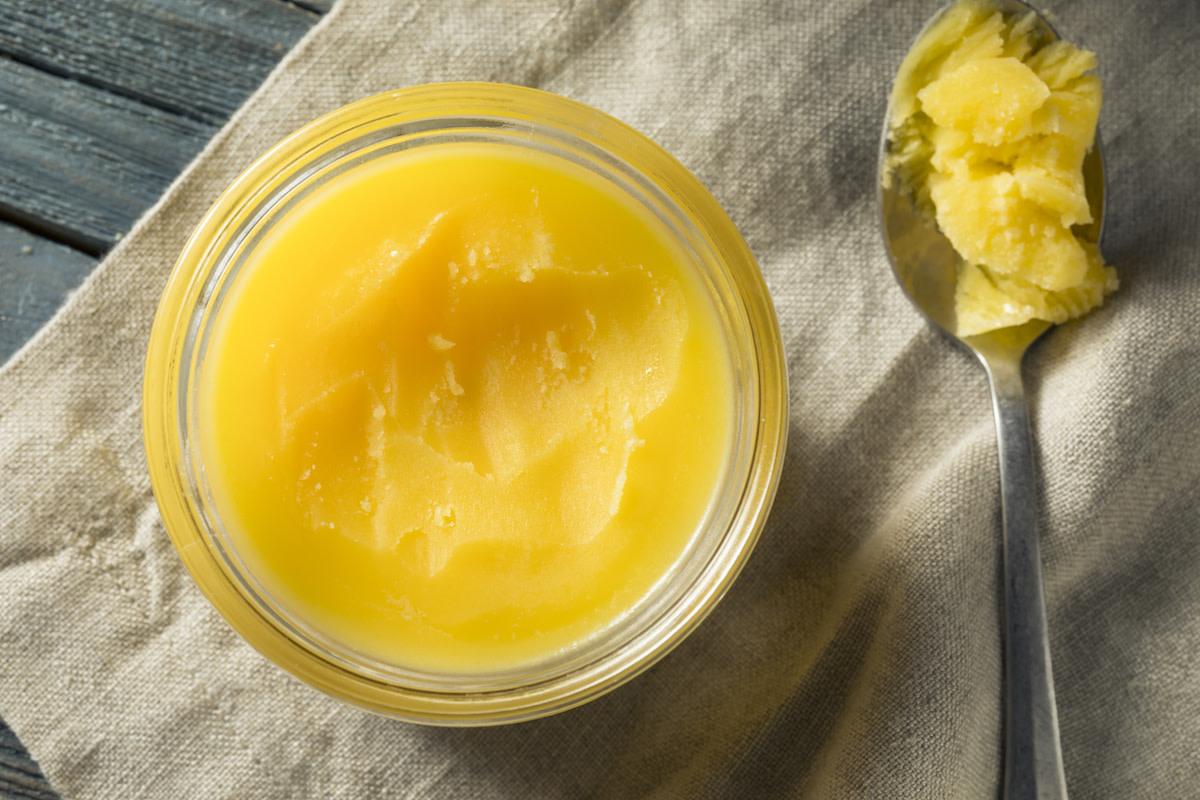
Ghee is a kind of clarified butter that originated in ancient India. It is popular in Indian cooking, as well as Asian and Middle Eastern cuisines, and is also an ingredient in the region’s traditional medicine, which is known as Ayurveda.
How Is Ghee Made?
Making ghee starts with butter derived from cow’s milk. A cook will simmer the butter until its water content evaporates and the remaining fat separates from the milk solids. It’s then a case of retaining this clear, pure butterfat and discarding the solids, which settle at the bottom of the pan.
Some producers might add spices for flavor, but otherwise, the taste comes from cooking duration and the quality of the butter. Simmering the ghee until the milk solids start to brown and smell toasted imparts a nutty flavor.
What Are the Health Benefits of Ghee?
Like butter, ghee had a bad reputation for decades due to its high calorie and saturated fat content. However, ghee contains vitamins A, D, E, and K. It is also a source of good saturated and polyunsaturated fats, and the short-chain fatty acid butyric acid, which has anti-inflammatory properties. Ghee also contains conjugated linoleic acid (or CLA).
5 Ways to Use Ghee in Cooking
Ghee is used similarly to regular butter and cooking oil in the preparation of food. Some common ways to use ghee are:
- 1. For frying, roasting or sautéing vegetables or meats. Ghee has a high smoke point, so it is a good cooking fat for use with high heat
- 2. As a topping for roti or baked goods
- 3. Melted over steamed vegetables to add flavor, as a substitute for olive oil
- 4. As a source of good fats in dairy-free smoothies
- 5. As a butter substitute for people who are lactose intolerant or where you want a nuttier flavor
How to Make Homemade Ghee
To make ghee at home, all you need is a quantity of unsalted butter, preferably grass-fed. Follow these steps:
- 1. Place the butter into a pan over low heat and leave to simmer. You’ll see the butter foam as its water content evaporates, and then clumps of white milk solids form.
- 2. Continue simmering for a little while as the solids turn a light golden brown and fall to the bottom of the pan. This longer cooking time is what gives ghee its slightly nutty, toasted flavor and separates it from regular clarified butter.
- 3. Place a strainer over a heatproof bowl and line it with cheesecloth or a coffee filter. Pour in your butter, letting the strainer collect the milk solids.
- 4. Put your ghee in an airtight glass jar and leave at room temperature to solidify.
Become a better home cook with the MasterClass Annual Membership. Gain access to exclusive video lessons taught by culinary masters, including Chef Thomas Keller, Alice Waters, Gordon Ramsay, and more.


Ghee vs. Clarified Butter: Similarities and Differences Between Ghee and Butter
Jun 21, 2019

Does Ghee Go Bad? How to Store Ghee at Home
May 3, 2022

Golden Milk Recipe: How to Make Turmeric Milk
May 3, 2022

How to Make Clarified Butter: Clarify Butter in 2 Easy Steps With Chef Thomas Keller
Apr 17, 2019

11 Types of Butter: How Butter Is Made
Mar 16, 2022

What Are Curry Leaves? How to Use Curry Leaves in Cooking
Jun 3, 2019
Other articles
Butter Recipe: How to Make Homemade Butter
Jun 1, 2021
How to Make Brown Butter: 5 Ways to Use Brown Butter
Aug 6, 2020
Drawn Butter Recipe: How to Make Drawn Butter in 5 Minutes
Dec 4, 2021
Beurre Monté Recipe: How to Make Emulsified Butter Sauce
Jun 2, 2020
What Is Oleo? History, Uses, and Substitutions
Dec 20, 2021
Ashwagandha Guide: How to Use Ashwagandha Powder
Sep 29, 2020