5 Ways Writers Can Benefit From Audio Journaling
Written by MasterClass
Last updated: Jul 28, 2021 • 2 min read
An audio journal functions much like a written journal. It lets you quickly record great ideas on your smartphone or other recording device so you can revisit them at a later time.

Learn From the Best
What Is Audio Journaling?
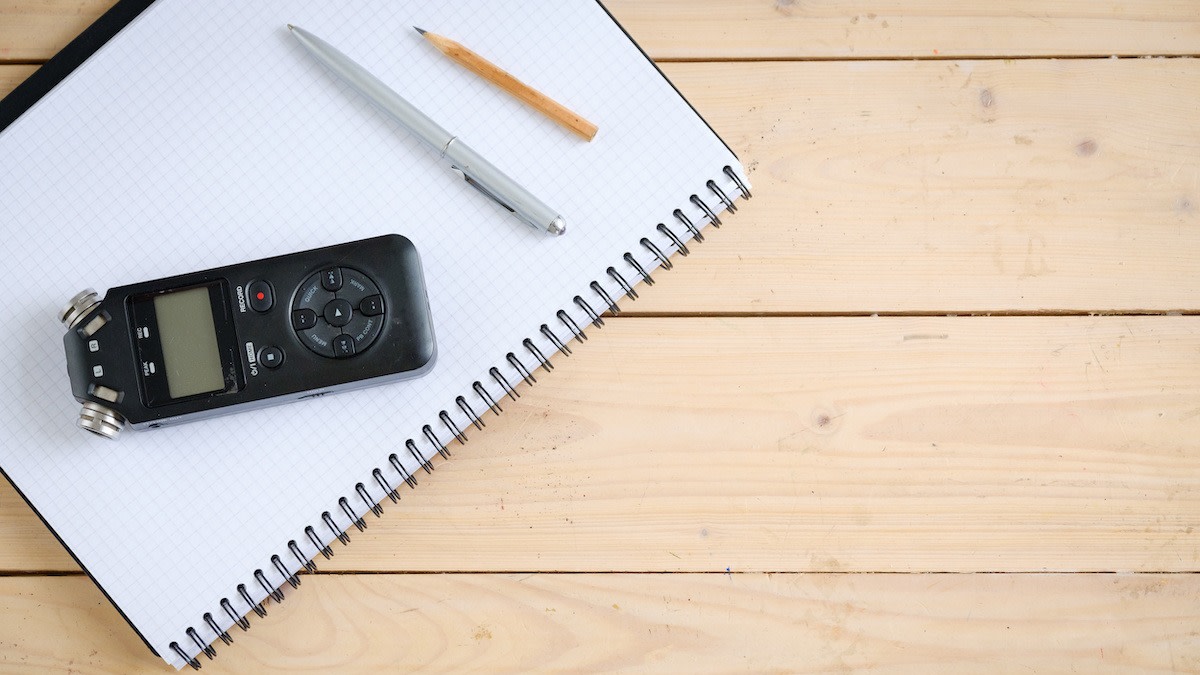
Audio journaling transfers the traditional written journal into an audio recording-based system. The typical audio journal entry is made on a smartphone, using an audio diary or audio journaling app. A standard audio journal app captures voice recordings, but most are equipped with speech-to-text technology that turns your voice recording into written words.
5 Benefits of Audio Journaling
Here are some of the ways that audio journals are particularly useful for writers:
- 1. Daily entries are easy. If you’re simply trying to keep an ongoing record of your life—much like a traditional diary—an audio journal app can make this highly convenient. You can create a routine where you record diary entries into the app at the same time every day, perhaps after dinner or right before bed.
- 2. You can record an entry whenever an idea crosses your mind. You don’t need to be sitting at a desk to use an audio journal. Whether you’re sitting down to a meal or stuck in traffic on your commute, you can quickly whip out your phone and record an entry in your digital journal app.
- 3. You can brainstorm more freely. For creative types, ideas flow differently in different media. If you experience occasional writer’s block when writing down your ideas, you may find that a voice diary app makes ideas flow more freely. You may just want to hit record and keep talking until your ideas reach a deeper level of complexity.
- 4. Audio journaling is faster than writing. Many audio journaling apps automatically transcribe your sound files and save them in written format. If you are self-conscious about hearing the sound of your own voice, an app that converts audio files to text can be immensely useful. While the simplest way to keep an audio journal is to use the voice recorder app that comes pre-installed on essentially every smartphone, it may not have a transcription feature. If you’re seeking greater functionality, there is a variety of audio recorder apps that can serve all your audio journaling needs.
- 5. Audio journaling is an easy way to start a journaling routine. When you’re first getting into audio journaling, it helps to keep a routine. Attempt to record a five-minute journal entry every day. The more intensely you commit, the more likely you are to incorporate the habit into your everyday routine. You may get so into recording that you’ll start your year making audio journal entries and end it cutting tracks for a podcast or audiobook.
Want to Learn More About Writing?
Become a better writer with the Masterclass Annual Membership. Gain access to exclusive video lessons taught by literary masters, including Malcolm Gladwell, David Baldacci, Joyce Carol Oates, Dan Brown, Margaret Atwood, David Sedaris, and more.


How to Write Better: 5 Benefits of Journaling
Nov 16, 2019

Journaling Techniques: 12 Tips for Writing Morning Pages
Dec 9, 2019

Voice-Over Equipment Guide: Essential Gear for Voice Actors
Dec 10, 2020

Joyce Carol Oates on the Importance of Journaling
Oct 15, 2019

How to Record a Podcast Remotely: Tips for Remote Recording
Sep 8, 2021

How to Keep a Dream Journal: 3 Benefits of Dream Journaling
Dec 2, 2019
Other articles
How to Keep a Commonplace Book: 4 Benefits of Commonplacing
Jan 30, 2020
8 Effective Journaling Techniques for Creative Writing
Jan 9, 2020
Audio Engineering Explained: 5 Audio Engineer Roles
Dec 7, 2021
Reading Journal Ideas: How to Keep a Reading Journal
Feb 22, 2022
How to Soundproof a Home Studio for Recording
Dec 4, 2020
WAV vs. MP3 Files: A Guide to Audio File Formats
Jul 16, 2020