How to Temper Eggs: 5 Steps for Tempering Eggs
Written by MasterClass
Last updated: Dec 18, 2021 • 1 min read
Custard, soup, or sauce recipes often require cooks to temper eggs. Tempering eggs means slowly combining cold beaten eggs with a hot liquid to produce a silky, thick texture.

Learn From the Best
What Is the Purpose of Tempering Eggs?
Tempering eggs means slowly combining beaten cold eggs or room temperature eggs with a hot liquid without scrambling or curdling the eggs in the process. When you temper eggs correctly, you will activate the egg's thickening power, achieving a rich and silky texture.
To temper eggs, mix a small amount of the hot liquid (such as hot milk, hot water, or soup broth) into the cold eggs to the temperature of the hot liquid. Then, mix the egg in with the rest of the hot liquid. The egg will thoroughly combine with the hot liquid without scrambling if you do this correctly.
What Recipes Require Tempered Eggs?
Sweet and savory recipes may call for cooks to temper eggs. Some dessert recipes that require tempering eggs include flan, lemon curd, cream pie, pastry cream, crème brûlée, homemade ice cream, pastry cream, crème anglaise, soufflés, and eggnog. Recipes like carbonara sauce, avgolemono, and hollandaise sauce also require tempered eggs.
How to Temper Eggs in 5 Steps
To temper eggs, you will need a whisk and a ladle. Follow these steps to temper eggs properly:
- 1. Crack the raw eggs in a bowl. After cracking the eggs, whisk the eggs together. Specific recipes may require whisking only the egg yolks, so be sure to separate the egg whites from the egg yolks.
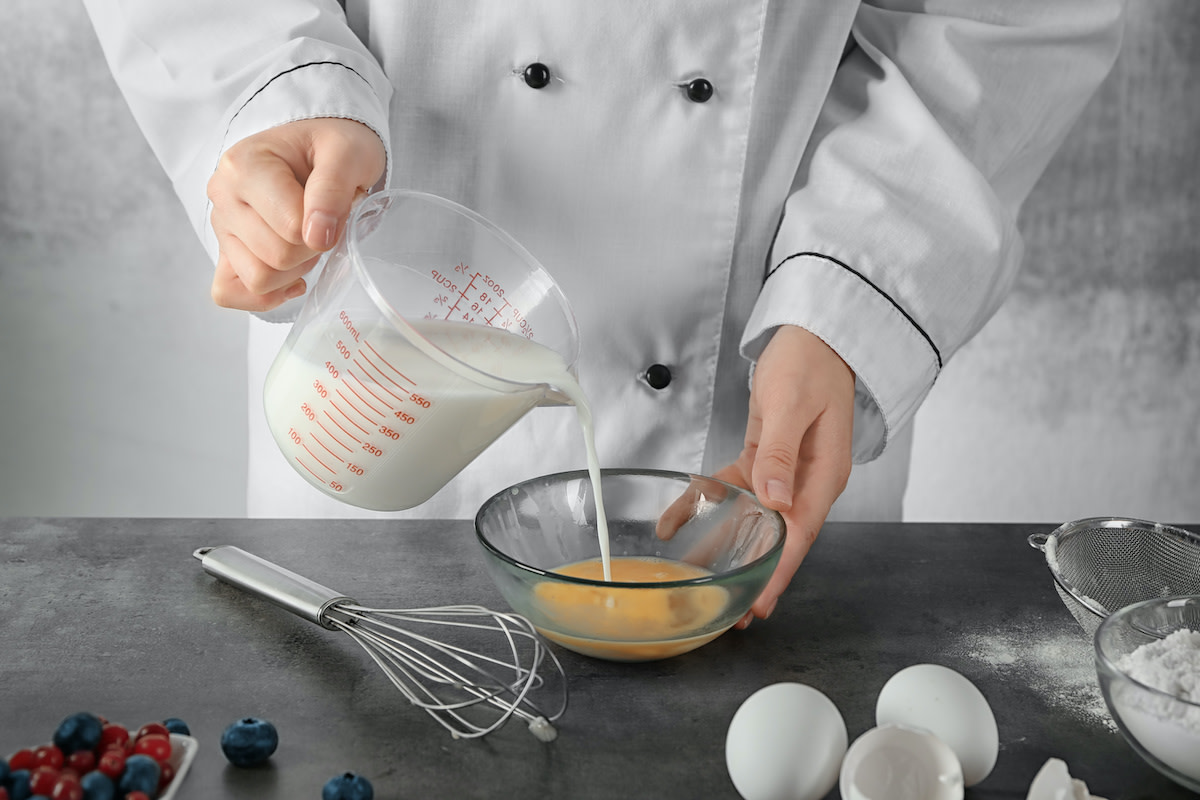
- 2. Stream in hot liquid. Slowly stream the hot liquid into the eggs while whisking using a ladle. You can put the bowl of eggs on a dishtowel to prevent the bowl from moving.
- 3. Assess the temperature. Touch the egg mixture with your finger. If it’s not warm yet, slowly whisk in another ladle of hot liquid. If it’s warm, add the egg mixture into the hot liquid.
- 4. Thicken the mixture. After combining, you can continue whisking the mixture until the mixture is as thick as you desire. Be sure to scrape the bottom and the sides of the bowl.
- 5. Strain the mixture. If the final product is chunky, you can run it through a strainer.
Want to Learn More About Cooking?
Become a better chef with the MasterClass Annual Membership. Gain access to exclusive video lessons taught by the world’s best, including Massimo Bottura, Gabriela Cámara, Niki Nakayama, Chef Thomas Keller, Yotam Ottolenghi, Dominique Ansel, Gordon Ramsay, Alice Waters, and more.


Frozen Custard vs. Ice Cream: Differences Between the Desserts
Oct 29, 2021

How to Thicken Milk in 6 Ways
Jan 25, 2022

4 Ways to Thicken Mac and Cheese
Jan 25, 2022

How to Thicken Sauce Without Cornstarch
Jan 18, 2022

Make Gordon Ramsay’s Perfect Scrambled Eggs Recipe (With Video)
Oct 9, 2018

How to Make Custard: 9 Ways to Prepare Custard
Jan 8, 2020
Other articles
Gordon Ramsay Dessert Recipe: Raspberry Soufflé
Oct 17, 2018
Crème Brûlée Without a Torch: How to Make Easy Crème Brûlée
Sep 22, 2022
Easy Vanilla Crème Brûlée Recipe: How to Make Perfect Crème Brûlée at Home
Jul 18, 2019
Diplomat Cream Recipe: 4 Tips for Making Diplomat Cream
Oct 6, 2021
Learn How to Temper Chocolate With Chef Dominique Ansel
Nov 30, 2018
How to Make Consommé: Step-by-Step Consommé Recipe
Dec 13, 2019