Learn About Soyuz, the Decades-Old Spacecraft That Shuttles Astronauts to the International Space Station
Written by MasterClass
Last updated: Sep 29, 2021 • 3 min read
The Soyuz spacecraft is one of the oldest spacecraft still in use today, used by astronauts as they travel to and from the International Space Station (ISS). Soyuz played an instrumental role in helping astronauts conduct research and experiments to learn more about our solar system.

Learn From the Best
What Is the Soyuz Spacecraft?
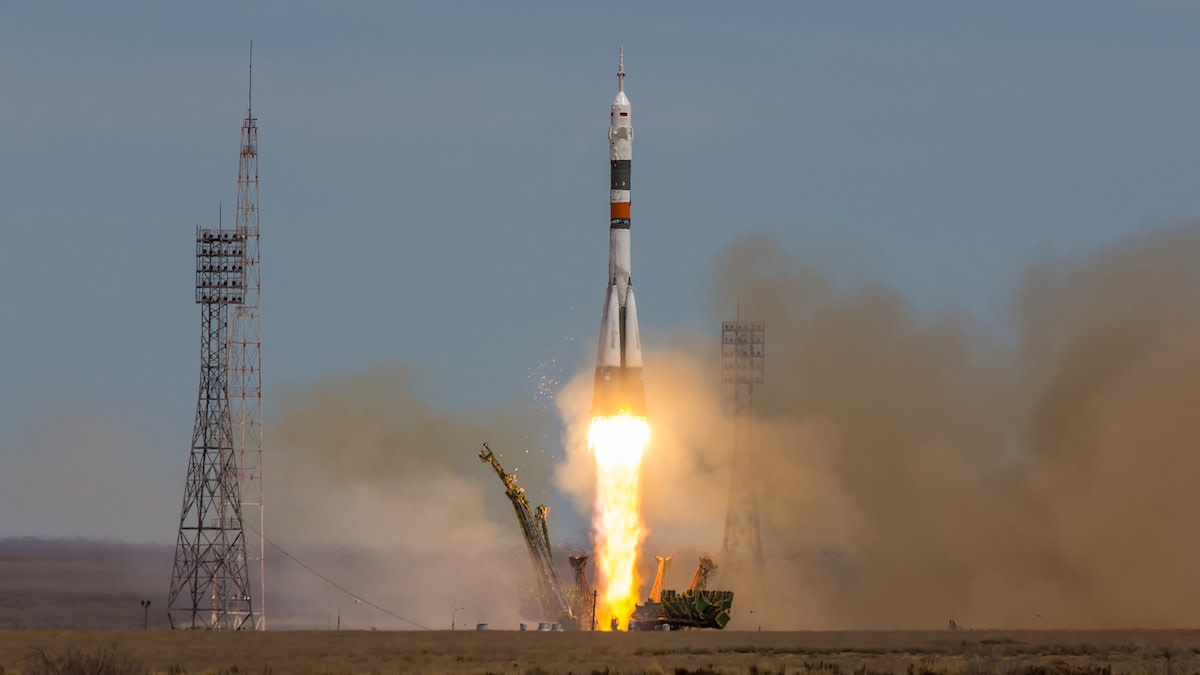
The Soyuz is a Russian spacecraft used to transport astronauts and supplies back and forth between Earth and the International Space Station (ISS). The Russian Soyuz spacecraft is launched on a Russian Soyuz rocket.
As the only way currently to transport astronauts to and from the ISS, the Soyuz is used not only by Russia’s space program, Roscosmos, but also by the United States space program, NASA, and by the European Space Agency (ESA).
What Are the Origins of the Soyuz Spacecraft?
The Soyuz was originally designed to be used as part of the Soviet’s planned lunar space program. The first Soyuz launch occurred in 1966 and the first crewed Soyuz mission, known as Soyuz 1, was in 1967.
- Soyuz 1 ended in the untimely death of cosmonaut Vladimir Komarov after the Soyuz vehicle crashed upon re-entry into the Earth’s atmosphere due to parachute failure. Subsequent Soyuz launches worked to perfect the spacecraft and its systems, such as the ability to dock with a space station.
- Once fully operational, Soyuz flights mainly shuttled cosmonauts to and from the Mir space station.
- More recently, Soyuz rockets are used to shuttle Russian cosmonauts as well as astronauts from the United States, China, the European Space Agency and more to and from the International Space Station.
- Soyuz spacecraft also serve as “lifeboats” for the crew onboard the ISS should an emergency require them to abandon the ISS. Learn more about the International Space Station here.
3 Essential Components of the Soyuz Spacecraft
The two main components of the Soyuz before launch are the Soyuz rocket and the Soyuz capsule, which is on top of the rocket. Once the spacecraft reaches outer space, all rockets have been jettisoned and just the three main modules of the capsule remain. The modules Soyuz capsule are:
- 1. Orbital module. The orbital module is a single-use module that provides a space for the crew members to reside during orbit. The module sits at the top of the Soyuz spacecraft and is spherical in shape. The orbital module holds all equipment that will not be needed upon reentry.
- 2. Descent module. The descent module is the middle module of the Soyuz spacecraft, which is used for re-entry. The descent module is outfitted with a heat shield to protect the craft from burning up during reentry and has two parachutes and braking engines that fire moments before impact to prevent hard landings.
- 3. Service module. The service module sits at the back of the Soyuz spacecraft. It contains systems for communication, temperature control, guidance, and other spacecraft processes. It also contains a non-pressurized section holding the main engine.
How Does the Soyuz Operate?
Like all spacecraft, the Soyuz leaves the launch pad piggybacking on a specially designed launch vehicle called the Soyuz rocket. The Russian rocket is generally launched from the launch site at the Baikonur or Plesetsk Cosmodrome.
- The Soyuz spacecraft is launched using the Soyuz family of rockets. The rocket has three stages made up of different types of rockets including the Soyuz-FG rocket and Soyuz ST.
- Once the ship has left the Earth’s atmosphere, the spacecraft control system uses thrusters to navigate.
- Onboard the Russian Soyuz capsule, the crew uses a mirrored periscope to visually line the ship up exactly with the horizon of Earth, firing thrusters to also turn it to parallel motion across the ground.
Though the Soyuz is old, it has withstood the test of time. Though third-party private companies, like SpaceX, have designed spacecraft to shuttle astronauts and equipment to and from the ISS, Soyuz is the primary launch system and spacecraft for these missions.
Want to Learn More About Space?
Whether you’re a budding astronautical engineer or simply want to become more informed about the science of space travel, learning about the rich and detailed history of human space flight is essential to understanding how space exploration has advanced. In Chris Hadfield’s MasterClass on space exploration, the former commander of the International Space Station provides invaluable insight into what it takes to explore space and what the future holds for humans in the final frontier. Chris also talks about the science of space travel, life as an astronaut, and how flying in space will forever change the way you think about living on Earth.
Want to become better engaged with science and technology? The MasterClass Annual Membership provides exclusive video lessons from master scientists and astronauts, including Chris Hadfield.


What Is the International Space Station? Learn About the History of the ISS, Its Purpose, and Structure
Aug 7, 2019

What Is Mir? Learn About the Mir Space Station’s Origins and 9 Key Milestones From Its History
Jun 14, 2019

Learn About BEAM: The Expandable Module Developed for Space Exploration
Sep 13, 2019

What Is Salyut 1? Learn About the History and Impact of the World’s First Space Station
Sep 3, 2019

What Is the Skylab Space Station? Learn About Skylab’s Operational History and Skylab’s Impact on Space Exploration
Aug 9, 2019

Canadarm2: Learn About Canada’s Contribution to the International Space Station
Sep 12, 2019
Other articles
What Is Canadarm? Learn About the Robotic Arm That Helped Build the International Space Station
Sep 3, 2019
How Life Support Systems Work on the International Space Station
Aug 31, 2019
What Is the Sabatier Reaction? Learn How Astronauts Create Water and Oxygen in Space
Aug 31, 2019
What Was the Gemini Spacecraft? Learn About NASA’s Historic Spacecraft and Gemini’s Role in the Apollo Missions
Sep 13, 2019
European Space Agency: History and Recent Missions
Oct 28, 2020
Fabric Guide: Learn About Leather
Oct 29, 2019