Modern Mexican cuisine often incorporates ancient ingredients like hominy. Used as an ingredient for thousands of years, hominy is often cooked whole in classic dishes like the Mexican soup menudo, or ground into masa and shaped into corn tortillas. Hominy is a staple ingredient throughout Mexican cuisine.

Learn From the Best
What Is Hominy?
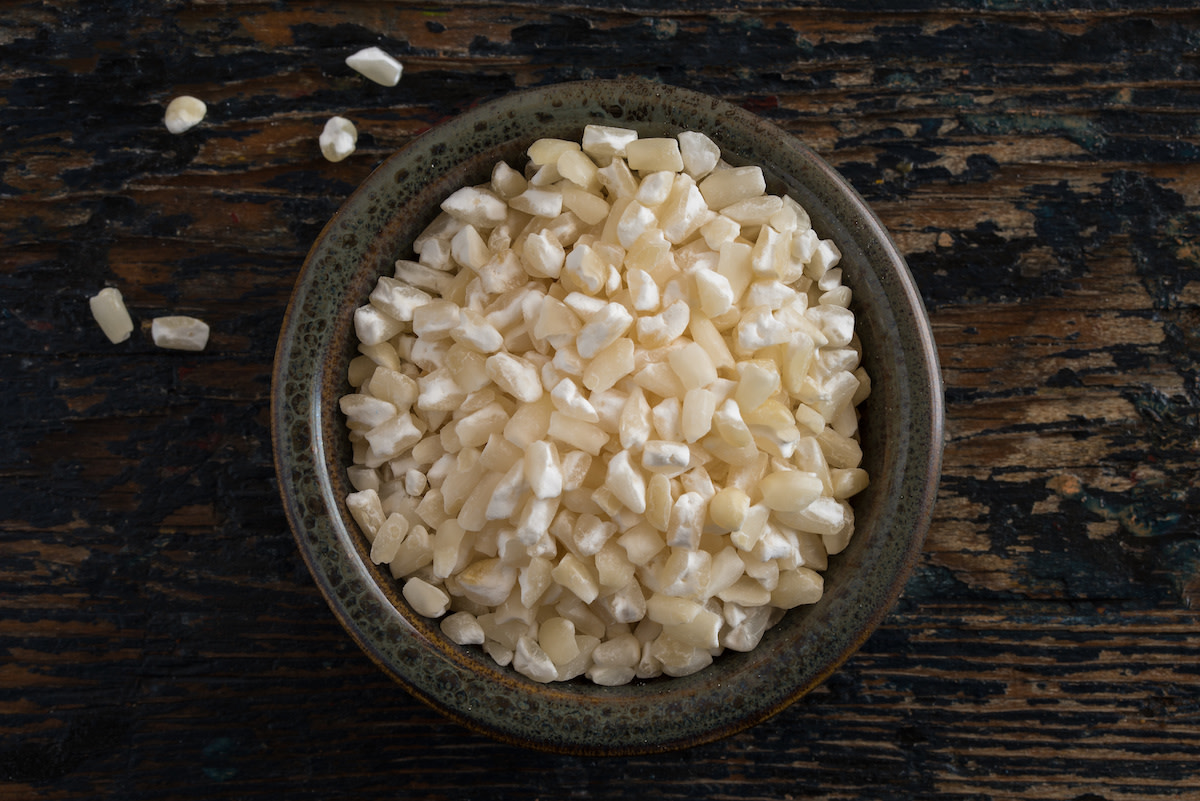
Hominy is made from the kernels of dried corn, also known as maize. Unlike sweet corn eaten on the cob, hominy is made from field corn, which are varieties grown for cereals and flours. Hominy is made from kernels of corn that are processed in an alkaline solution. Hominy can be made with either yellow or white corn. The kernels are either eaten whole, in meals like soups and stews, or ground into a cornmeal called masa harina, which is the essential ingredient in corn tortillas and tamales.
What Does Hominy Taste Like?
With the unmistakable flavor of corn, hominy’s taste and texture vary depending on how the grain is used. Ground and turned into masa—the dough made by combining masa harina with water—hominy has an earthy flavor. Whole, cooked hominy is bigger and fluffier than regular corn, with a chewy texture and nutty, earthy undertones. Its subtle, starchy, and neutral flavor makes hominy the perfect ingredient for so many recipes, like Mexican stews where it adds a thicker texture that absorbs the surrounding flavors. Hominy is a gluten-free food that is also high in dietary fiber.
How Is Hominy Made?
Hominy is prepared in an alkaline solution, a process that has been used since 1500 BC in Mesoamerica, the region that is now Central America. Whole field corn kernels are soaked in either a lime solution, lye solution, or wood ash solution overnight. This is known as the nixtamalization process. After they are soaked, the hulls are removed from the outside of the kernels of corn, which allows them to puff up to twice their size. Removing the external skin also makes it easier to grind the kernels down into masa.
While you can do this process at home, it’s easier to buy hominy ready to use. Hominy can be found either as dried kernels or in the canned vegetables section of a grocery store. Dried hominy corn, like dried beans, needs to be rehydrated. The kernels should be soaked for eight hours and then simmered for another hour, either on the stove or in an instant pot.
4 Ways to Use Hominy in Your Cooking
Both white hominy and yellow hominy are used in many Mexican dishes as well as some stateside favorites. Uses for hominy include:
- 1. Masa harina: Fine-ground hominy is a cornmeal known as masa harina. Combined with water, it becomes masa, or dough. Masa harina is the primary ingredient in corn tortillas and tamales.
- 2. Hominy grits: This popular breakfast side dish is a staple in American Southern cuisine. Hominy grits are similar to polenta in texture, but polenta is made from an Italian type of corn known as otto file. Hominy grits are served hot, often with cheddar cheese or gravy on top.
- 3. Thickening agent: Hominy is a popular addition to stews, soups, and casseroles to help thicken the recipe. Two traditional Mexican stews that use hominy, include red posole—made with pork shoulder, hominy, and ancho and guajillo chile peppers—and chicken pozole verde—made with chicken broth, chicken breast, salsa verde, hominy, green chiles, garlic, cumin, and Mexican oregano.
- 4. Atole: In Mexico, hominy is used to make atole. Atole is a warm traditional drink made of ground masa. It’s usually sweetened with piloncillo (unrefined whole cane sugar) and scented with cinnamon.
Want to Learn More About Cooking?
Become a better chef with the MasterClass Annual Membership. Gain access to exclusive video lessons taught by culinary masters, including Gabriela Cámara, Chef Thomas Keller, Massimo Bottura, Dominique Ansel, Gordon Ramsay, Alice Waters, and more.


Masa Harina vs. Corn Flour: How the Corn Products Differ
May 18, 2022

What Is Masa Harina? How to Use Masa Harina in Mexican Cooking
Mar 20, 2020

Masa de Maíz Tutorial With Gabriela Cámara
Nov 30, 2022

What Is Corn Flour? How to Use Corn Flour in Your Cooking
Dec 1, 2020

How to Know When to Use Corn Tortillas vs. Flour Tortillas
Mar 27, 2020

Polenta vs. Cornmeal: How Do They Compare?
Oct 11, 2021
Other articles
Blue Corn Tortillas Recipe: How to Make Blue Tortillas
May 5, 2022
How to Make Corn Tortillas: Homemade Corn Tortilla Recipe
Mar 17, 2020
Guide to Pozole: Exploring Mexico’s Take on Traditional Stew
Jul 14, 2020
How to Make Homemade Arepas: Easy Arepas Recipe
Jun 2, 2020
How to Make Champurrado: Authentic Mexican Hot Chocolate Recipe
Feb 27, 2020
How to Cook With Tripe: 8 Traditional Tripe Dishes
May 19, 2020